The order I walk the walls in now
I gave Elmina Castle one humid October afternoon and learned that two hours is not enough if you rush the rooms that matter. The site sits in the coastal town of Elmina, on Ghana's Atlantic edge, and it does not need my summary of the transatlantic slave trade. What it needs is a route: five stops inside the walls, chosen for what each one explains, not for what it photographs.
The white exterior fools first-time visitors into expecting a monument to architecture. By the second courtyard the building has corrected them. Below is the order I use now, and the reason each stop earns its slot.
The dungeons, and why they come first
The cramped holding rooms still stand as they were left, and they once held hundreds of enslaved Africans at a time. Numbers that size slide off a paragraph and land hard when you are standing in the room that carried them.
- Go down before the tour groups thicken. The passages into the dungeons are narrow and dimly lit, and the single-file crawl into the lower rooms works better with four people behind you than with fourteen.
- Read the walls, not the leaflet. The dungeon surfaces carry names and markings scratched by the people held there. The marks are the primary document; everything printed in the gift shop is commentary.
- Give the room thirty minutes of silence. The guides here run quiet on purpose. I found the silence did more than any script could, and I stopped asking questions halfway through, which is the only review of the dungeons I trust.
The bright halls, which are part of the story
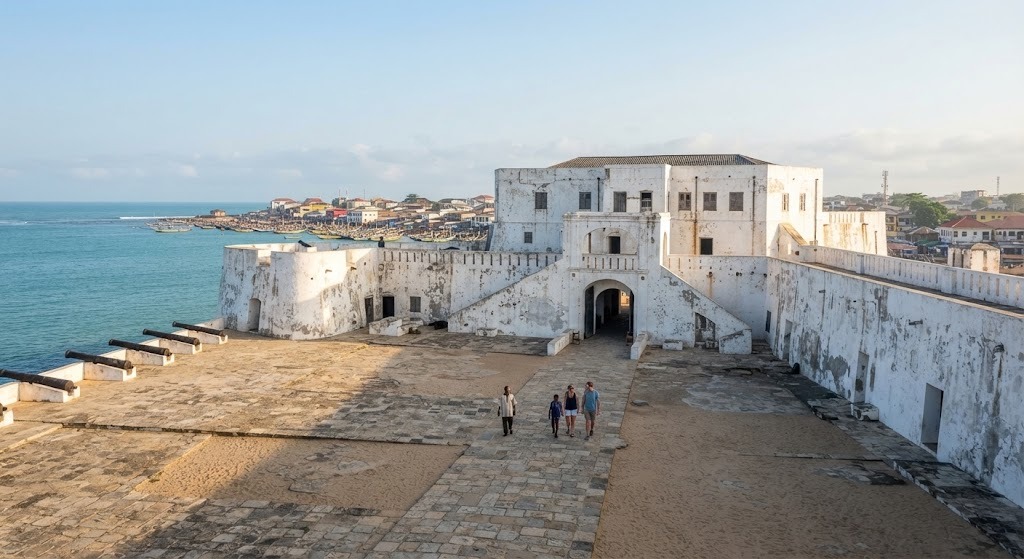
The upper floors run to bright white walls and ornate archways, and the contrast with what sits underneath is not decoration. It is the point.
- Walk the galleries after the dungeons, not before. Beauty encountered first softens the visit; beauty met after the lower rooms lands as evidence that the people who ran this place lived comfortably above their own crime.
- Watch the light on the plaster. The whitewash needs repainting on a schedule that says the site is maintained as a memorial, not abandoned as a ruin. That distinction matters for how Ghana presents the castle to school groups and foreign delegations.
The 1482 Portuguese layer
The fortress went up in 1482, built by Portuguese traders as a secure point for gold and ivory leaving the coast. The century that followed treated it as a commercial warehouse with walls thick enough to keep rivals out.
- Find the oldest masonry first. The earliest courses of stone mark the difference between the trading post and everything the Dutch added later. A local guide can point the join; I could not see it alone.
- Put the town in the frame. Elmina grew around the castle, and the fishing beach below the walls explains why this inlet won the Portuguese argument with every other stretch of coast.
The Dutch century, and what they turned it into
The Dutch took the castle in the seventeenth century and, over the decades that followed, rebuilt its purpose. The site became a centre of the transatlantic slave trade: people were captured inland, held in the rooms below, sold to European traders, and shipped west across the Atlantic.
- Trace the handover markers. Dutch construction sits on Portuguese bones, and the seams between the two occupations run through the courtyards. The building is a timeline you can walk without a plaque.
- Count the exits toward the water. The route from holding room to ship is short on a map and was designed to be short. Walking it inside the walls tells you more than the harbor view does.
The walk out, and what the visit is for
Today the castle stands as a memorial to what the trade did, and it draws visitors from across the world who come to learn, to pay respect to the people who suffered and died here, and to sit with the record. Ghana maintains it as a teaching site rather than a spectacle, which is why the guided route stays controlled and why photography rules shift room by room.
- Exit through the town, not the car park. The ten minutes through Elmina's streets reset the day better than any debrief, and the vendors outside the gates have waited for the same buses you are on.
- Write down one number that stuck. Mine was the dungeon occupancy. The visit fades; the arithmetic does not.
| Stop | What it explains | Time I give it |
|---|---|---|
| Dungeons | The scale of the trade, room by room | 30 minutes |
| Upper halls | How the operators lived above the rooms | 15 minutes |
| Portuguese masonry | Why this inlet beat the rest of the coast | 15 minutes |
| Dutch additions | How a trading post became a holding site | 20 minutes |
| Walk out through town | How the memorial sits inside a living place | 10 minutes |
If one stop has to lead, it is the dungeons. The halls, the masonry and the Dutch layer only gain their weight after the lower rooms have set the terms, and a visitor who starts upstairs spends the rest of the afternoon climbing back down through their own impression. Start below; the rest of the castle will explain itself.