Seven things worth knowing before you overnight in Maun
I have spent a decade eating my way through family trips across southern Africa, and Maun keeps coming up in research calls with operators. It is the last comfortable bed before the Okavango Delta, so the overnight there shapes a whole safari. Ker & Downey Botswana, a pioneer of ecotourism in the northern region, opened Grays Eden on 15 July 2024: twelve individually designed rooms, five Villas and seven Cottages, on a stretch of the seasonal Thamalakane River, owned by long-term Maun residents Sandrine and Sam Morris.
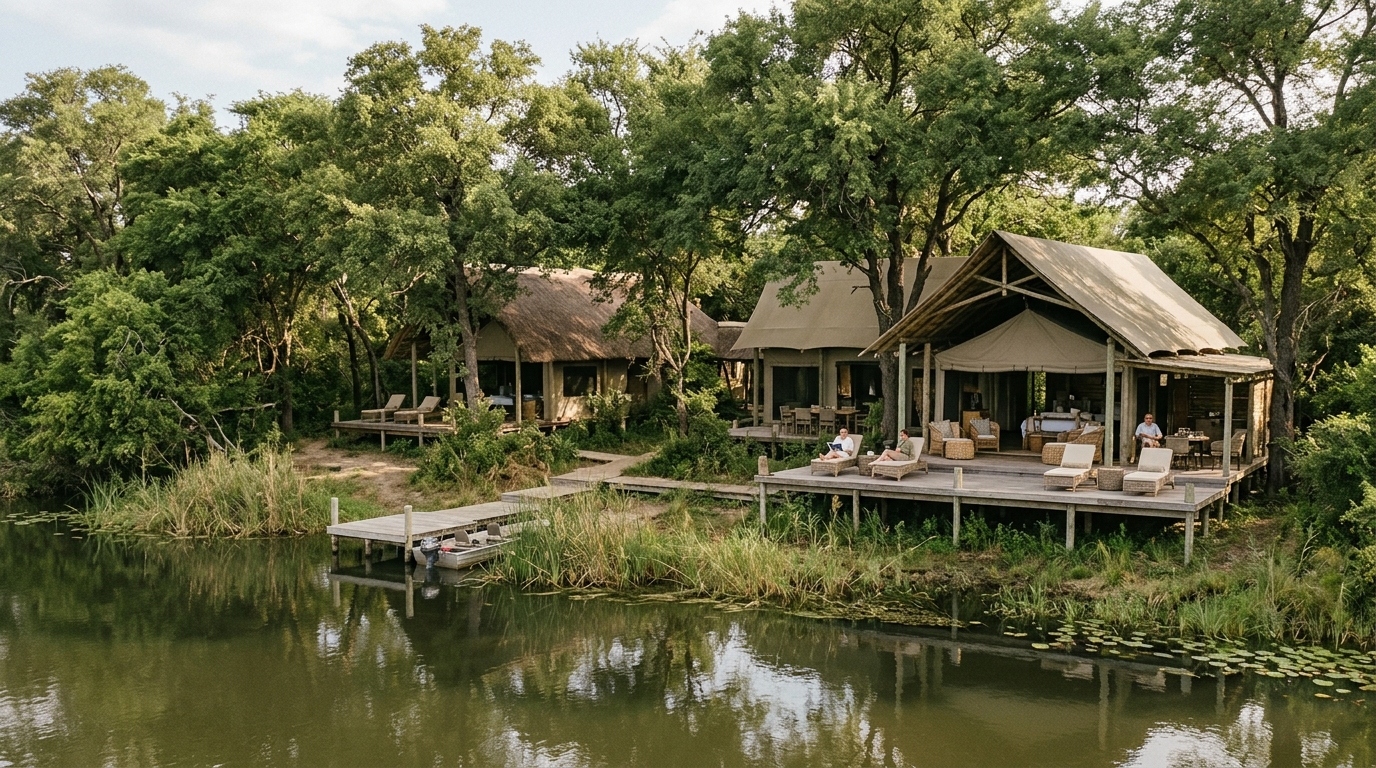
The build is deliberately quiet. Thatched high ceilings, tall archways, light blue and white interiors, wide verandahs facing grass and leadwood trees. The lounge spills onto a lawn where a seasonal picnic basket arrives with artisanal local produce. The distance from the airstrip that matters is about ten minutes by road, and the hotel handles that transfer with a meet and greet at the airport desk.
What follows are the seven things I would pin to the family calendar before paying a deposit.
- Time it around the river season. The Thamalakane River runs seasonal water levels, so a July to October safari pushes the property's pool and lawns at their best. I would book the river-facing rooms in those months and accept a cooler, emptier lawn in the rains.
- Choose villas over cottages for a family. Grays Eden has 12 rooms: 5 Villas and 7 Cottages. Villas give more floor for kids and a real sitting area; Cottages read better for couples or solo walkers. All rooms carry a verandah, a ceiling fan and a fireplace, which covers both the hot afternoons and the chilly July nights at 1,000 m elevation.
- Budget for the full board. The Eden Kitchen and Restaurant runs an a la carte menu built on local produce, heavy on Botswanan beef and river fish. From colleagues who ate there I learned to order the set breakfast and let the picnic basket cover the bank between excursions.
- Use the airport transfer, do not self-drive. The hotel sits around 10 minutes from Maun Airport with complimentary meet and greet and vehicle transfers. After a long flight with children, that handoff saves the first hour of the trip.
- Book spa and wine time before the safari, not after. In-villa spa treatments exist on site, and the Cliff Wine Cellar offers a private culinary and wine session. Most travelers book these on the end of a dusty circuit. I would put one on the arrival night instead - it resets you before the early game drives.
- Pack layers, not labels. Maun sits in the Kalahari fringe: warm days, cold nights, dust on everything. A light puffer, one good hat and laundry soap beat a formal wardrobe. The hotel's white-and-light-blue interior is calmer than most safari lodges, so neutral clothes feel right at dinner.
- Keep one slack day. Safari flights and Delta connections cancel more often than the brochures admit. Sleeping at the edge of town on the Thamalakane embankment, with the pool and the grass, turns a standby day into a pleasant one.
Notes on food and one caution
The Eden Kitchen leans on local sourcing, and the head chef is regarded as one of the finest in Botswana. I would plan dinners at the terrace rather than driving into town; the menu covers both local and international plates, so nobody at the table is stuck with one style of cooking. The seasonal picnic format works for the bank between activities.
My one caution: "boutique" means twelve rooms, and prime dates for the Delta circuit are in July, August and September. Book the transfer, the spa hour and the dinner slot on arrival day, because the best rooms go first and Maun does not have many second chances at this tier. A neighboring tented camp will be cheaper, but it rarely beats an embankment sunset and a warm fire after a cold dawn drive.
Of the seven, the two that matter most are the transfer and the slack day: both convert a stressful travel day into a rested start, and both are cheap insurance against Maun's notoriously thin spare capacity.
How the property fits the Okavango gateway
Maun sits at the edge of the delta, and Grays Eden positions itself as the last comfortable stop before the mokoro channels and the game drives begin. That location is the property's commercial logic: guests fly in, overnight, and transfer deeper into the delta the next morning. The boutique scale - a small room count rather than a lodge sprawl - keeps the guest-to-staff ratio high and the noise floor low, which is what ecotourism buyers actually pay for.
- Book the delta transfer on the same reservation. Coordinating the light-aircraft hop and the overnight in one booking removes the single most common failure point in Okavango itineraries.
- Ask about the shoulder-season rates. The dry months command premium pricing; the green season delivers the same wildlife with softer light and fewer aircraft overhead.
- Pack one soft bag, not a hard case. Light aircraft on the Maun routes enforce strict weight and shape limits; a duffel saves the fee a roller incurs.
What ecotourism means at this price point
Ker & Downey's reputation rests on conservation-linked travel, and Grays Eden extends that into a format guests can book for one or two nights rather than a full safari week. The test of whether a property earns the ecotourism label is what it returns to the surrounding community and habitat - and boutique hotels at this tier are judged on staffing, sourcing and waste as much as on the game drives they book for guests.
- Local staffing is the first indicator. Ask what share of the team is hired from Maun and the surrounding villages; high local retention usually tracks fair wages and training.
- Food sourcing is the second. A kitchen that buys from regional producers keeps more of the guest spend in the local economy than one importing luxury ingredients.
- Conservation fees should be itemised. Properties that show guests where the conservation contribution goes build more trust than those that bury it in the room rate.