What the park is, before the walkway stories
Kakum National Park sits in Ghana's Central Region and spans 375 square kilometres of rainforest that ranks among the most diverse in West Africa. I plan it as a half-day to full-day trip from the coast, and the planning rule I use is simple: the canopy experience and the ground experience are two different tickets, and visitors who only do the first leave having paid for a view they never earned. What follows is how I book the day.
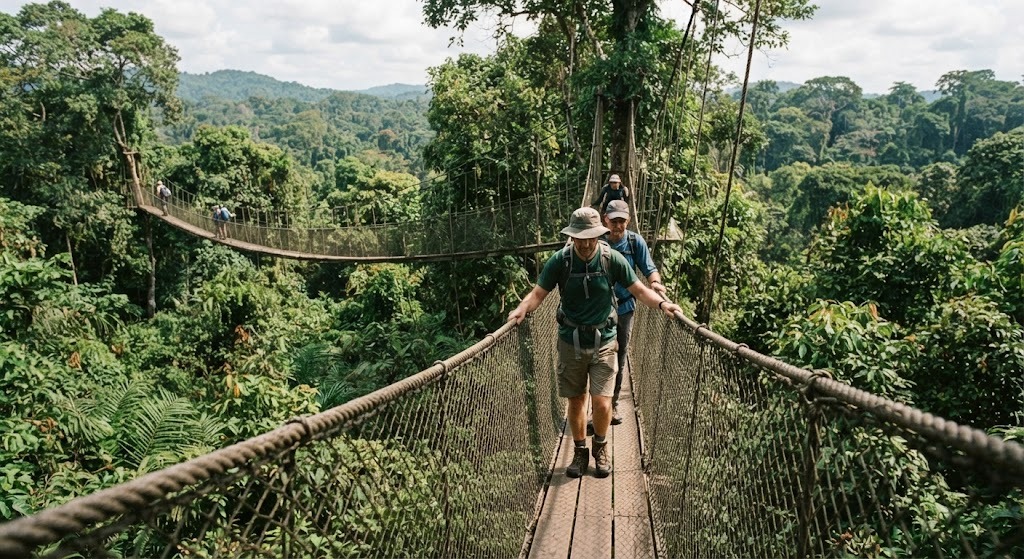
- Go up the Canopy Walkway first thing. The walkway is suspended 40 metres above the forest floor and stretches over 350 metres - one of the world's longest and highest. Morning light reaches the canopy before the heat builds, and the bridges hold fewer people before the tour buses arrive from Accra and the coast.
- Treat the walkway as a bridge, not an attraction. It is a series of suspension sections with wind and slight sway between towers. Hold the cables, keep spacing between groups, and give yourself twenty to thirty minutes for the crossing if you stop for the views, which you will.
- Take a ground trail after you come down. Several trekking trails run through the heart of the rainforest, and the forest floor is where the park's wildlife shows itself: monkeys, antelopes, and over 40 bird species, plus medicinal plants the guides name on sight. Skipping the ground trail means seeing the park from a boardwalk only.
- Hire the local guide for the cultural layer. Guided tours cover traditional beliefs and customs, the forest's role in local agriculture, medicine and spirituality, and - where the season allows - the rituals and offerings still made to the spirits said to inhabit the park. The guide is also how you hear the folklore version of Kakum, which no signboard carries.
- Book a night if the trek is the point of the trip. Eco-lodges inside the park and camping options in the rainforest extend the visit past the day-trip window. Night in Kakum is a different acoustic experience from the walkway hour, and dawn birding is the reward for staying.
- Carry water, closed shoes and rain cover. The canopy sections are exposed and the forest floor stays humid; a bottle, proper footwear and a dry bag for the phone cover ninety per cent of the complaints I hear at the exit gate.
- Pair the park with the coast, not with a second rainforest. Kakum sits between Accra and the Central Region beach towns, so the efficient route is beach one night, park the next morning, capital after. Two rainforests in one week is one rainforest too many.
Why the park matters beyond the photographs
Kakum is a conservation area protecting threatened and endangered plants and animals, and it functions as an economic centre for the surrounding communities: guides, porters and park staff earn from the visits, and tourist spending reaches local food, accommodation and transport. The park's management ties the ecology and the livelihoods together, which is why entrance fees and guided-tour rules are enforced rather than suggested. When you pay for the walkway, part of the payment is the forest's standing budget - a fact worth mentioning to anyone who asks what the ticket buys.
For a first visit, the sequence I keep recommending is walkway at opening, one ground trail with a guide, lunch in the park or at the nearest town, and the drive onward before the afternoon rain. It is a half-day that reads like a full one, and it beats another hotel-pool afternoon by a distance measured in monkey sightings.
The canopy walkway: what the 40 metres actually feel like
The walkway is not a single bridge but a chain of suspension sections strung between tree platforms and support towers. The highest point sits about forty metres above the forest floor - roughly a twelve-storey building - and the total crossing stretches over three hundred and fifty metres. The sway is gentle but constant, and the wind picks up between towers where the canopy opens slightly.
- Wear closed shoes with grip. The decking is wooden and can be slippery after rain; sandals are the most common mistake I see at the entrance.
- Leave the large backpack in the car. The suspension sections narrow in places, and a bulky bag throws off your balance on the swaying sections.
- Cross in small groups if the bridge is busy. The platforms between sections are the natural stopping points; large groups bunching on a single section make the sway worse for everyone.
- Stop at the mid-point platforms. The view from the platform is often better than from the bridge itself - you get the canopy at eye level without the motion.
- Take the morning slot for photography. Mid-morning light filters through the canopy at an angle that makes the green layers visible; overhead noon light flattens everything to a single shade.
- Allow thirty minutes for a leisurely crossing. If you stop for photographs and to let other groups pass, the full walkway takes about half an hour; a straight crossing without stops is closer to fifteen minutes.
Ground trails: where the wildlife actually is
The canopy gets the photographs, but the forest floor is where Kakum's biodiversity shows itself. Several marked trails wind through the undergrowth, and the difference between a self-guided walk and a guided one is the difference between seeing a monkey and understanding why it is there.
- Book a guide at the trailhead, not at the gate. Guides sign in at the trailhead board; booking one at the entrance means a wait while they walk up from the staff area.
- Ask about medicinal plants specifically. The guides know which leaves treat which ailments, and this is the part of the walk that connects the forest to the surrounding villages' daily lives.
- Keep noise down on the animal trails. The monkeys are habituated but not tame; loud groups push them higher into the canopy and out of camera range.
- Carry binoculars for the bird trails. Over forty species have been recorded, and several are canopy-dwellers you will hear before you see.
- Stay on marked paths. The forest floor is uneven and root-tangled; stepping off the trail risks both injury and damage to the understory the park protects.
When to go: season, weather, and the rain window
Kakum's rainforest climate means humidity year-round and rain possible in any month, but there are drier windows that make the walkway and trails more comfortable. The coastal location means morning fog is common in the dry season - which photographs beautifully but can delay the walkway opening if visibility is low.
- Aim for the drier months for the canopy. The walkway closes briefly in heavy rain; checking the park's status before you drive saves a wasted trip.
- Start at opening regardless of season. The gates open early, and the two hours after opening are the coolest and quietest of the day.
- Pack a light rain jacket even in the dry season. A passing shower is always possible, and the canopy does not protect you from rain that falls sideways.
- Avoid the peak holiday weekends. Ghanaian school holidays and public holidays bring large domestic visitor groups; mid-week visits are dramatically quieter.
Getting there: distance, roads, and the coastal link
Kakum sits roughly 180 kilometres north of Accra by road, about a three-hour drive depending on traffic leaving the capital. The park is also within reach of the Central Region beach towns - Cape Coast and Elmina are the usual bases - which makes a beach-and-forest combination the most efficient itinerary.
- Leave Accra early to beat the city traffic. The first hour out of the capital is the slowest; starting before dawn means you reach the park gates near opening.
- Combine with Cape Coast if you have two days. Elmina Castle and Cape Coast Castle are within an hour of the park; pairing them with Kakum gives a history-and-nature itinerary without long drives.
- Hire a car with a driver for the coastal leg. Road conditions between Cape Coast and Kakum vary; local drivers know the junctions and the shortcut turns that maps miss.
- Fill the fuel tank in Cape Coast. Petrol stations thin out north of the coastal road; topping up before the park turn-off avoids the single-station situation at the junction.
What to bring: the short list that covers everything
The park sells water at the entrance, but everything else on this list is easier to bring from the coast than to find at the gate. The canopy and the forest floor demand slightly different kits, and the overlap is smaller than most packing lists suggest.
- Closed shoes with ankle support. The walkway decking and the trail roots both reward a shoe that grips and covers the ankle.
- Insect repellent for the ground trails. The canopy is breezy enough that insects are minor; the forest floor is where repellent earns its place in the bag.
- Water: two litres per person for a full day. The walkway alone needs less, but combining canopy and trails in the humidity means drinking more than you expect.
- Dry bag for electronics. Humidity inside the park is constant; a ziplock or dry bag keeps phones and cameras functional for the drive onward.
- Small bills for guide tips and entrance. The park accepts cards at the main gate but guides and small vendors prefer cash in Ghanaian cedis.
- Binoculars if you care about birds. Forty-plus species means the difference between hearing them and seeing them is optical.
Where to stay: eco-lodges, camping, and the coast alternative
The park offers eco-lodge accommodation and camping within the rainforest, which turns a half-day visit into an overnight nature experience. For most visitors, though, the more comfortable option is basing on the coast and treating Kakum as a morning excursion - you get the beach in the evening and the forest at dawn.
- Book eco-lodges well in advance. Capacity inside the park is limited; peak season books out weeks ahead.
- Camping requires your own gear or a rental arrangement. Confirm what the park provides before you rely on it; tent and sleeping-mat availability varies.
- Coastal bases give you dinner options the park cannot. Cape Coast and Elmina have restaurants and guesthouses at every budget; the park's dining is limited to basic meals.
- Staying overnight enables dawn birding. The first hour after sunrise is when the canopy is most vocal - a day-tripper misses this entirely.
How the park fits a wider Ghana itinerary
Kakum is one node in a network of Central Region attractions that include the two colonial castles, the fishing harbour at Elmina, and the beach resorts between Cape Coast and Busua. The efficient loop runs Accra to Kakum in the morning, Cape Coast for the night, Elmina Castle the next morning, and back to Accra - or onward to the Western Region beaches if you have a week.
- Do Kakum before the castles, not after. The physical energy of the walkway is better spent before the emotional weight of the castle tours.
- Allocate half a day for Kakum, not a full one. Unless you are camping, the walkway plus one trail plus lunch fills four to five hours comfortably.
- Book castle tickets online if visiting on a weekend. Elmina and Cape Coast Castle see their longest queues on Saturdays; mid-week mornings are the quietest.
- Keep one unplanned afternoon. The Central Region rewards spontaneity - a roadside palm-wine stop or a beach detour often becomes the trip's best story.
| Segment | Time needed | Notes |
|---|---|---|
| Canopy walkway | 20-30 min | Morning light best |
| Ground trail with guide | 1-2 hours | Wildlife and plants |
| Accra to Kakum drive | ~3 hours | Leave early |
| Coastal link (Cape Coast) | ~1 hour | Beach + castle combo |
If one choice has to lead, start with the walkway at opening - it is the park's signature experience, the morning conditions are best, and everything after it (trails, lunch, the drive onward) is easier to schedule once the bridges are behind you. The ground trails reward the patient, but the walkway is what makes the trip worth the three-hour drive from Accra.