Why I keep coming back to one question from Gaborone
In November 2022 I was standing in the crowd outside the Awards gala at the Gaborone Sun, and I watched Ghana's delegation take two trophies on one night. Dr. Ibrahim Mohammed Awal went up first for Destination Lifetime, and then the Ghana Tourism Authority team collected the Outstanding African Tourism Media and Marketing Award. I am a researcher who follows budget family trips across West Africa, and I will admit the pride hit hard.
The three-day forum around it, ATLF2022, packed in operators, ministry officials and airline reps comparing notes on how the continent recovers. Botswana's president Dr. Mokgweetsi Masisi and environment minister Philda Nani Kereng spoke about policy that treats tourism as the backbone of the economy, not a side project. Their targets were public: visitors, jobs, tax.
Back home the numbers need translating into a conversation we actually have. Ghana sits at the top of West Africa in the World Economic Forum Travel and Tourism Development Index and 12th on the continent. The national target, repeated for years now, is two million international arrivals and at least four billion dollars a year by 2024. Dr. Awal has also talked about one million domestic tourists a year and 150,000 jobs created annually, a figure he shared during a Meet the Press appearance.
Here is the part that bothers me. I have heard these targets recited many times, and almost never attached to a plan. Targets drift downward with each revision. Meanwhile ordinary Ghanaians feel tourism mostly as something that happens to other people.
Pick one - Service delivery at the gate
My first pick is the welcome itself, because it is where the promise meets the visitor. At Kakum the boardwalk operator's flow and the castle grounds at Elmina both run on staff confidence, signage and ticket queues. The how-it-works behind a better welcome:
- publish visible ticket prices and opening hours at every gate, in English and a local language
- train front-line staff to answer three questions: what is nearby, how long it takes, what it costs
- keep one complaints channel with a human answering within a day
I watched a family lose forty minutes at a ticket counter because the price list had no child rate. The fix costs less than a billboard.
Pick two - Hospitality people can afford
The second pick is price transparency in lodging. Ghana's target of 150,000 jobs a year will not materialize if a three-night domestic trip costs more than two months of local wages. The how-it-works for affordability:
- tax incentives for guesthouses that publish breakfast-inclusive family rates
- a public list of licensed budget beds by region so travelers stop guessing
- partnerships with tro-tro unions to bundle day-trip tickets with rooms
My own trips upcountry improved the moment a guesthouse in Cape Coast quoted me a full week rate in one line instead of a vague "we can discuss".
Pick three - Paying attention at the attractions
The third pick is condition. A castle courtyard with broken railings or a closed restroom reads to a visitor as a country that did not care enough. The how-it-works for upkeep:
- quarterly public inspection notes posted at each major site
- a small ticket levy earmarked for maintenance instead of general revenue
- local hiring for guides, which gives site staff a reason to keep the story accurate
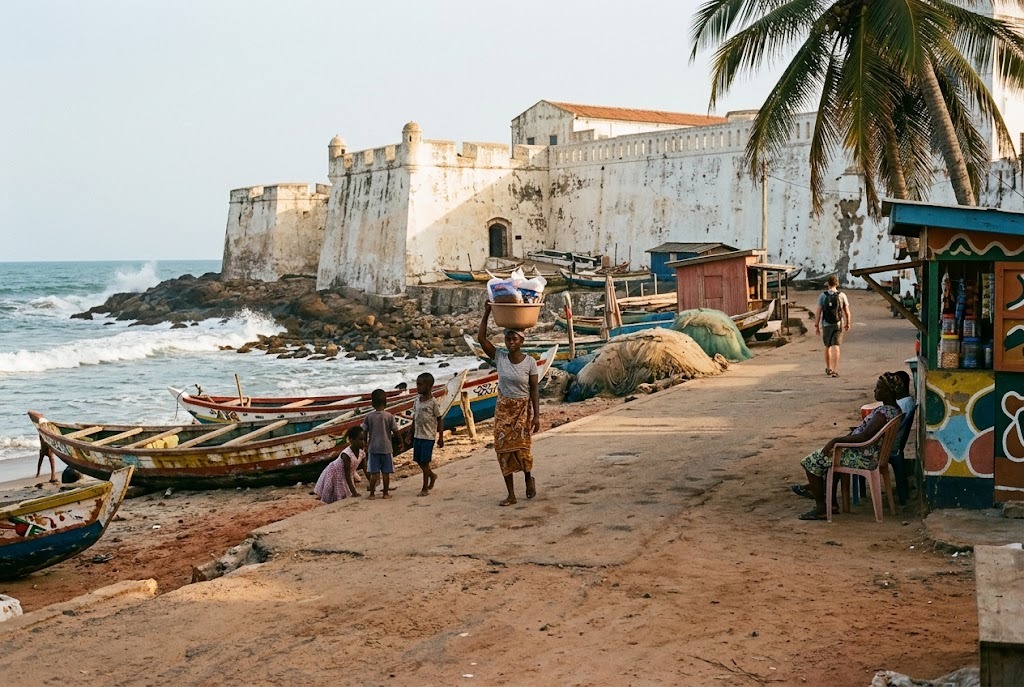
Elmina's dungeons, which I walked with my kids, deserve lighting that lets people see the walls and reflect without turning it into a scare.
Pick four - Promoting the right version of Ghana
The fourth pick is marketing that matches reality. Campaigns built on slogans draw the wrong visitors and sour the first three picks. The how-it-works for honest promotion:
- feature real guesthouse owners and real prices in campaign footage
- push domestic routes - Akosombo, Busua, the mole chalets at Mole National Park - as weekend products
- answer WhatsApp and Instagram enquiries within hours, because that is how families actually book now
South Africa and Kenya both built recovery momentum after 2021 on exactly that: showing township tours and homestays honestly rather than with stock beaches.
Pick five - Coaching operators, not just counting them
The fifth pick is operator support. Small businesses around Anomabo, Bolgatanga and Cape Coast compete against chains without their training budgets. The how-it-works for coaching:
- seasonal workshops run by the GTA on pricing, insurance and first aid
- a shared booking calendar so weekend crafts markets and boat tours do not clash on the same date
- micro-grants for safety equipment - life vests, guardrails, first-aid kits at beach operators
I have sat in on one such workshop in Cape Coast. The operator questions were practical: how to insure a wooden boat, how to quote a group rate. Nobody asked for a billboard.
How the five picks stack up
A roundup is only useful if the reader can compare picks quickly. Here is my scorecard, weighted by impact on the two million arrival target:
| Pick | Who owns it | First step | Timeline |
|---|---|---|---|
| Gate welcome | Site managers, GTA | Publish prices and hours | 3 months |
| Affordable stays | Ministry, guesthouse unions | Licensed budget list | 6 months |
| Site condition | Boards of major sites | Posted inspection notes | 3 months |
| Honest marketing | GTA comms team | Real owners in footage | Next campaign |
| Operator coaching | GTA training units | Seasonal workshops | Per season |
Which pick to start with and why
If one pick has to lead, it is the first: service delivery at the gate. Everything else - word of mouth, repeat visits, the four billion revenue figure - travels on the visitor's first hour in Ghana. A family that buys a ticket with a smile and a clear price becomes an advertisement that no campaign can purchase.
The forum crowd in Gaborone applauded the awards because Ghana earned them. The more useful applause, I think, waits for the conversation that happens back here, between the ministry, the operators and the families deciding whether a weekend in Ghana is worth the bus fare.